
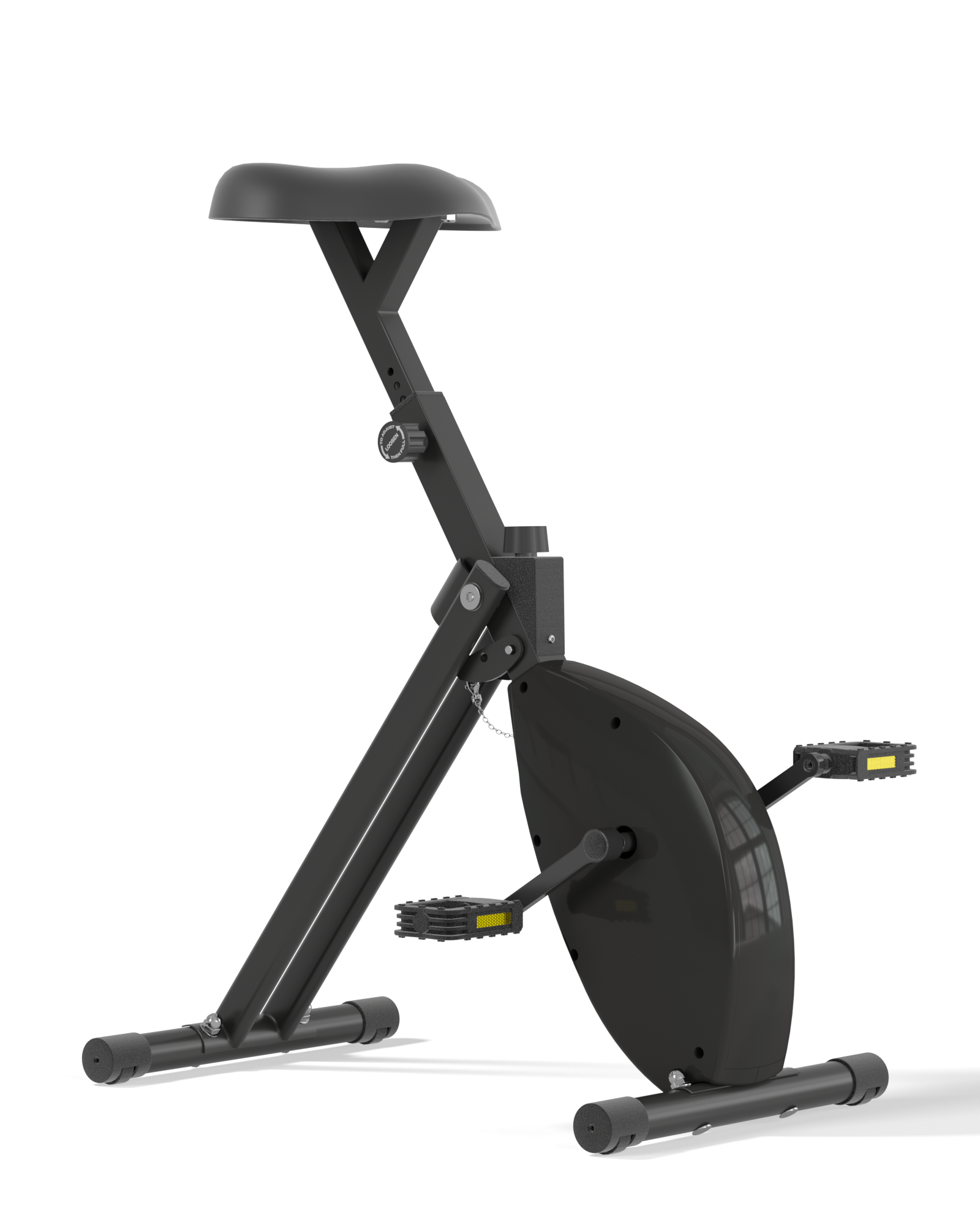
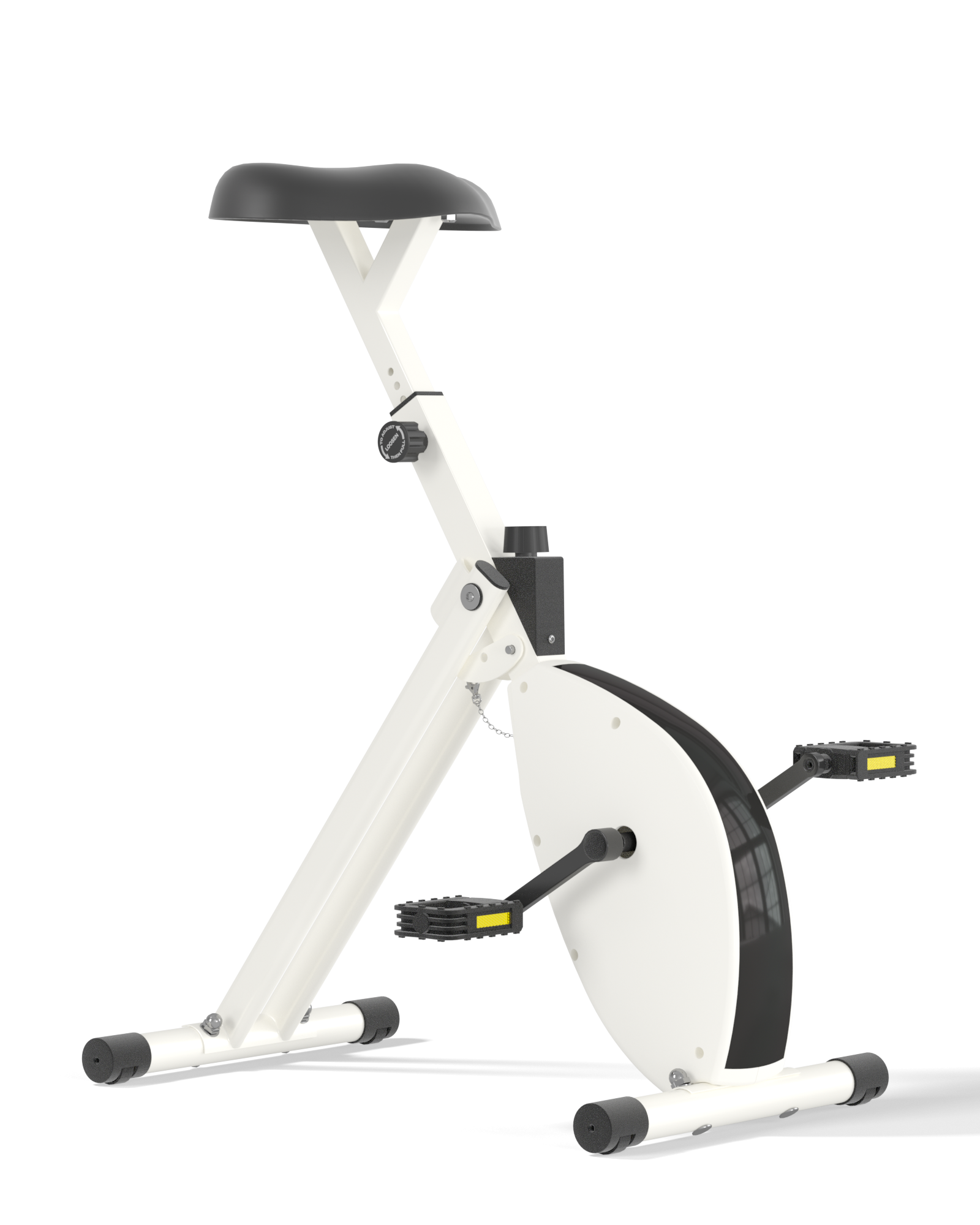
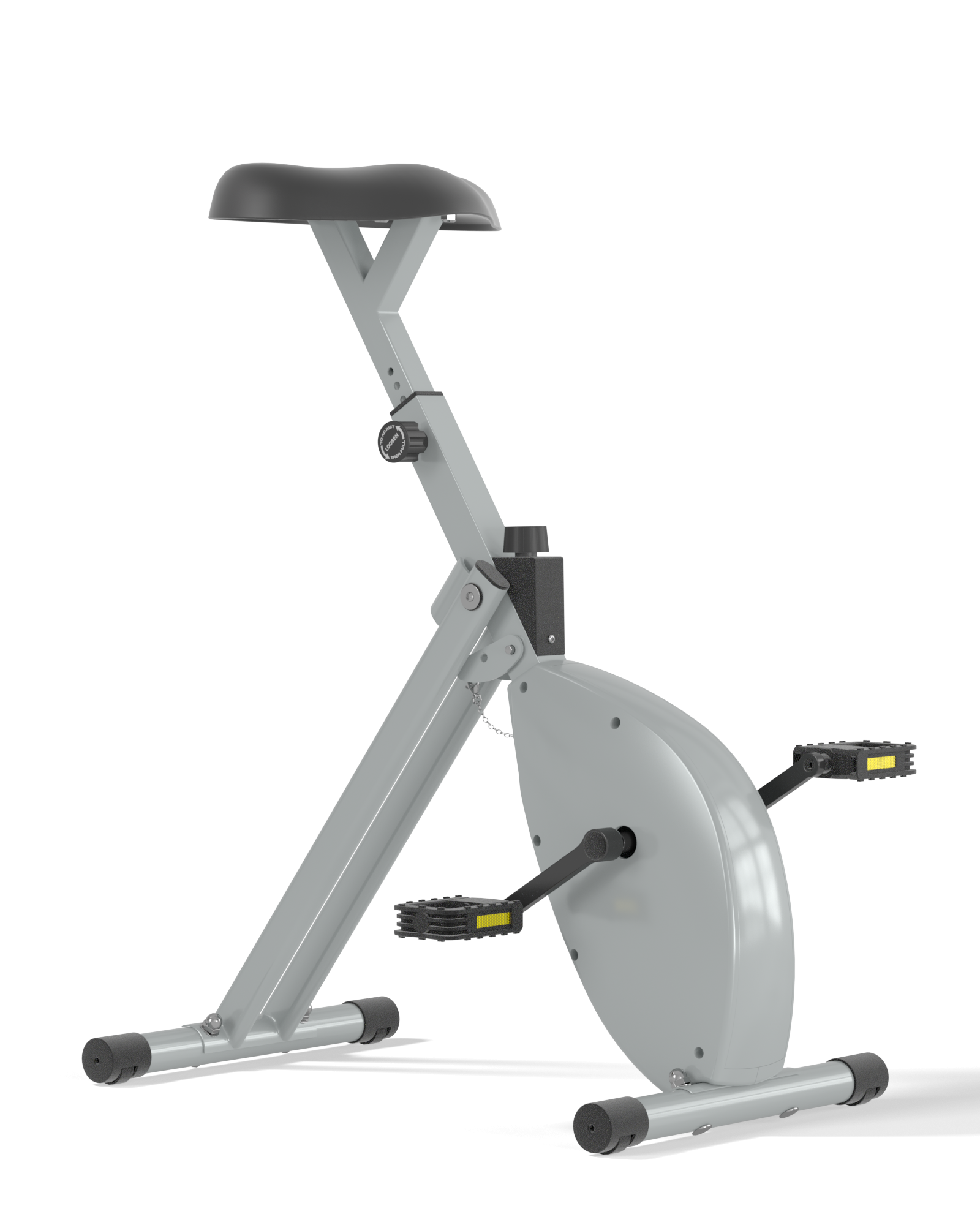
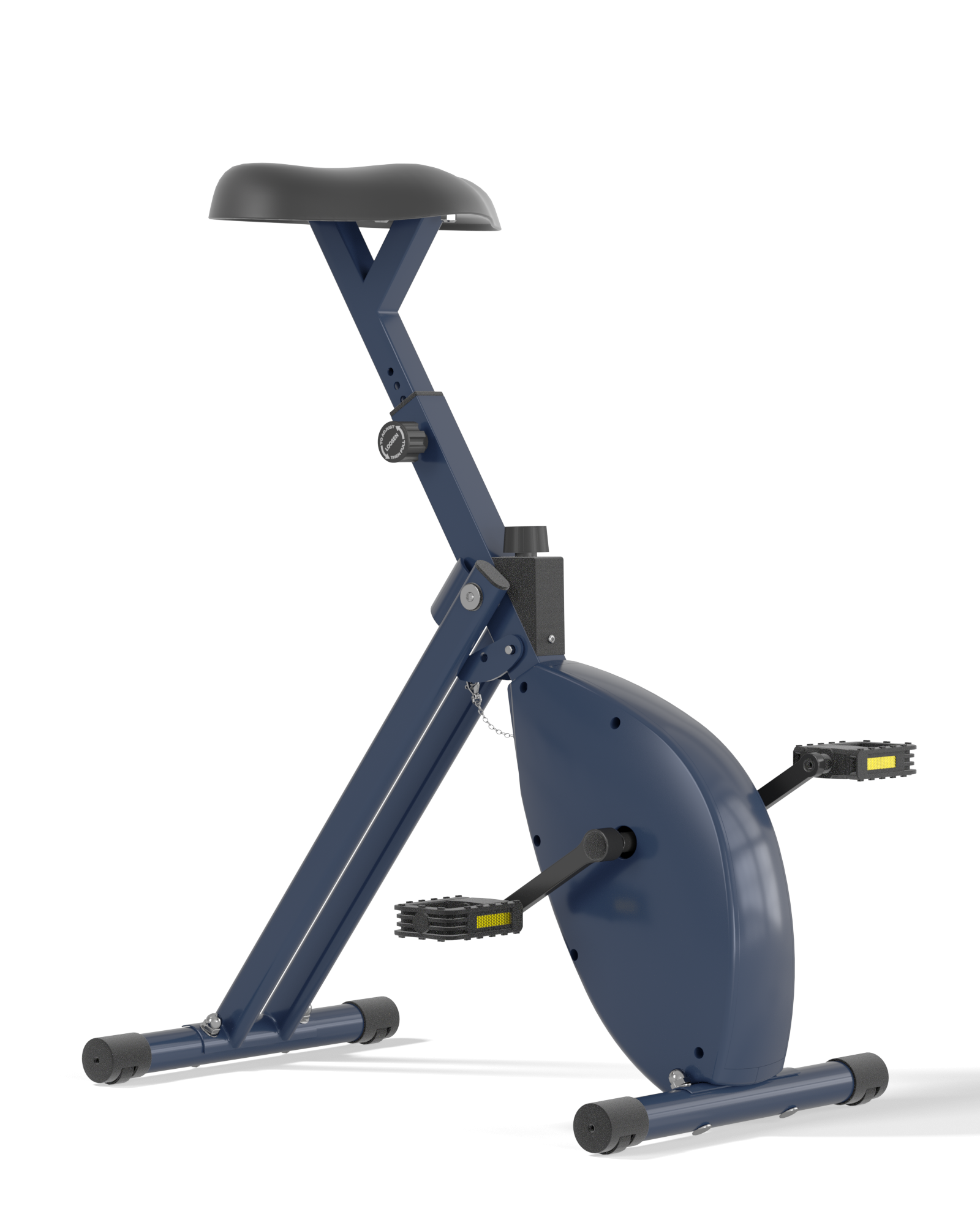
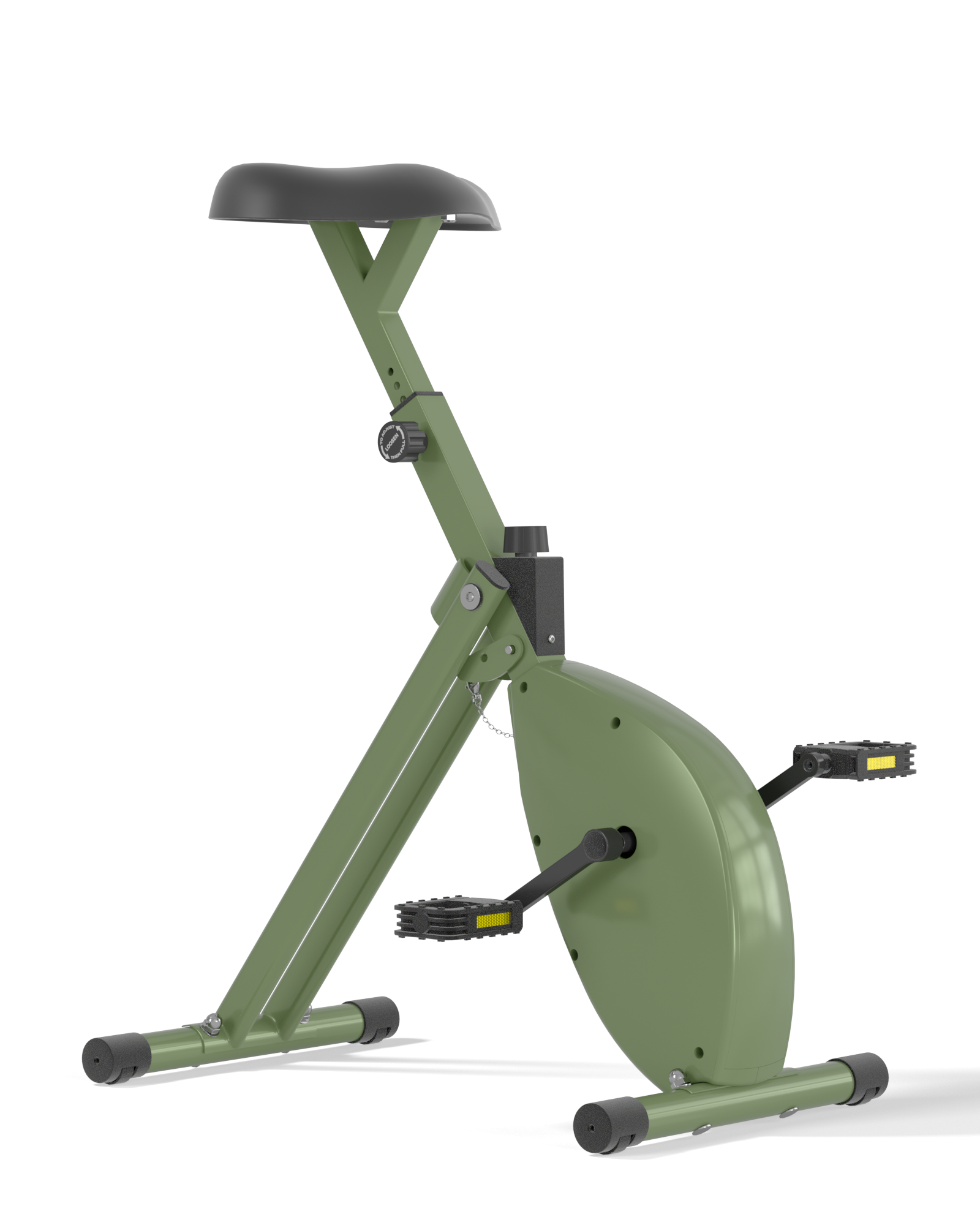
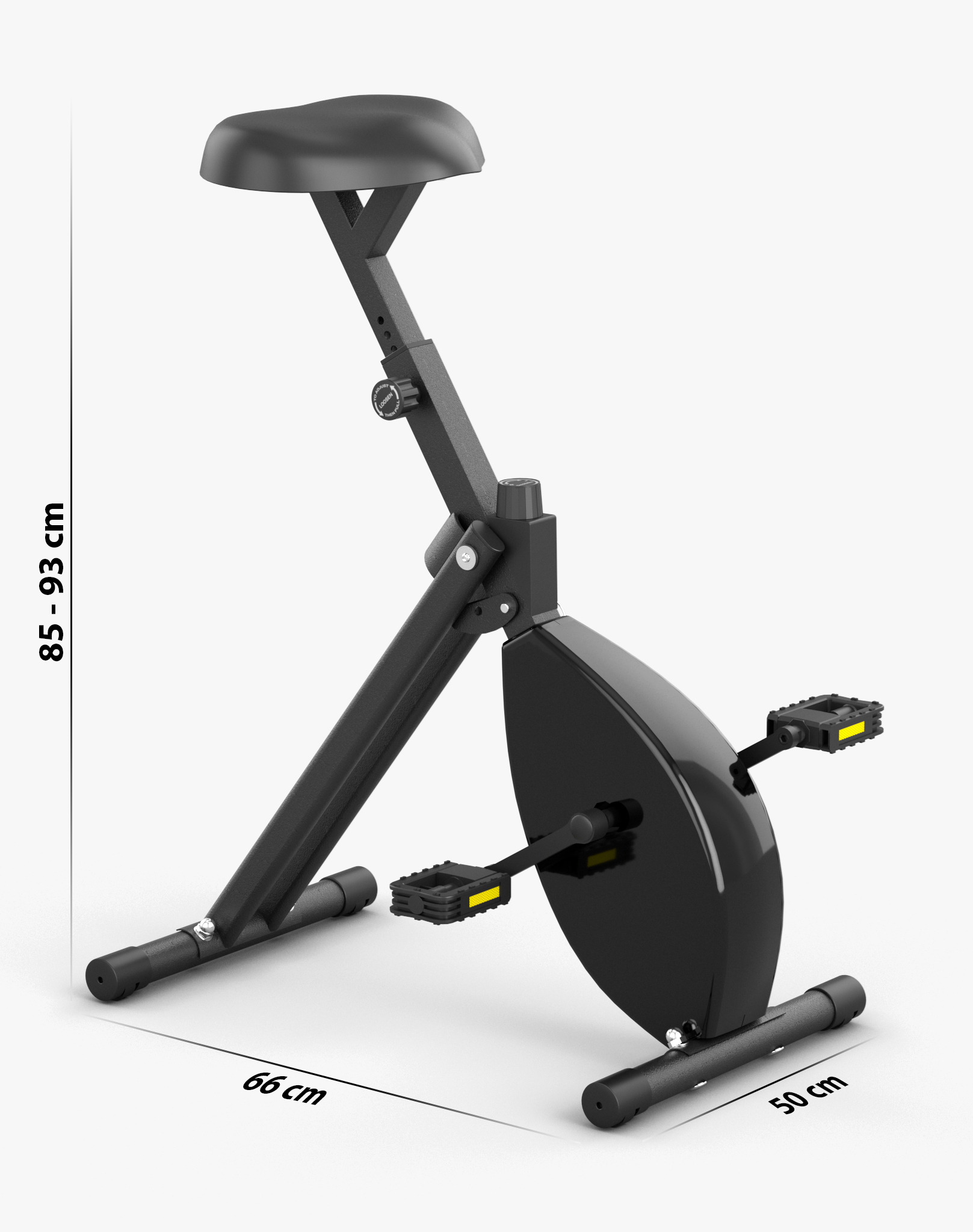
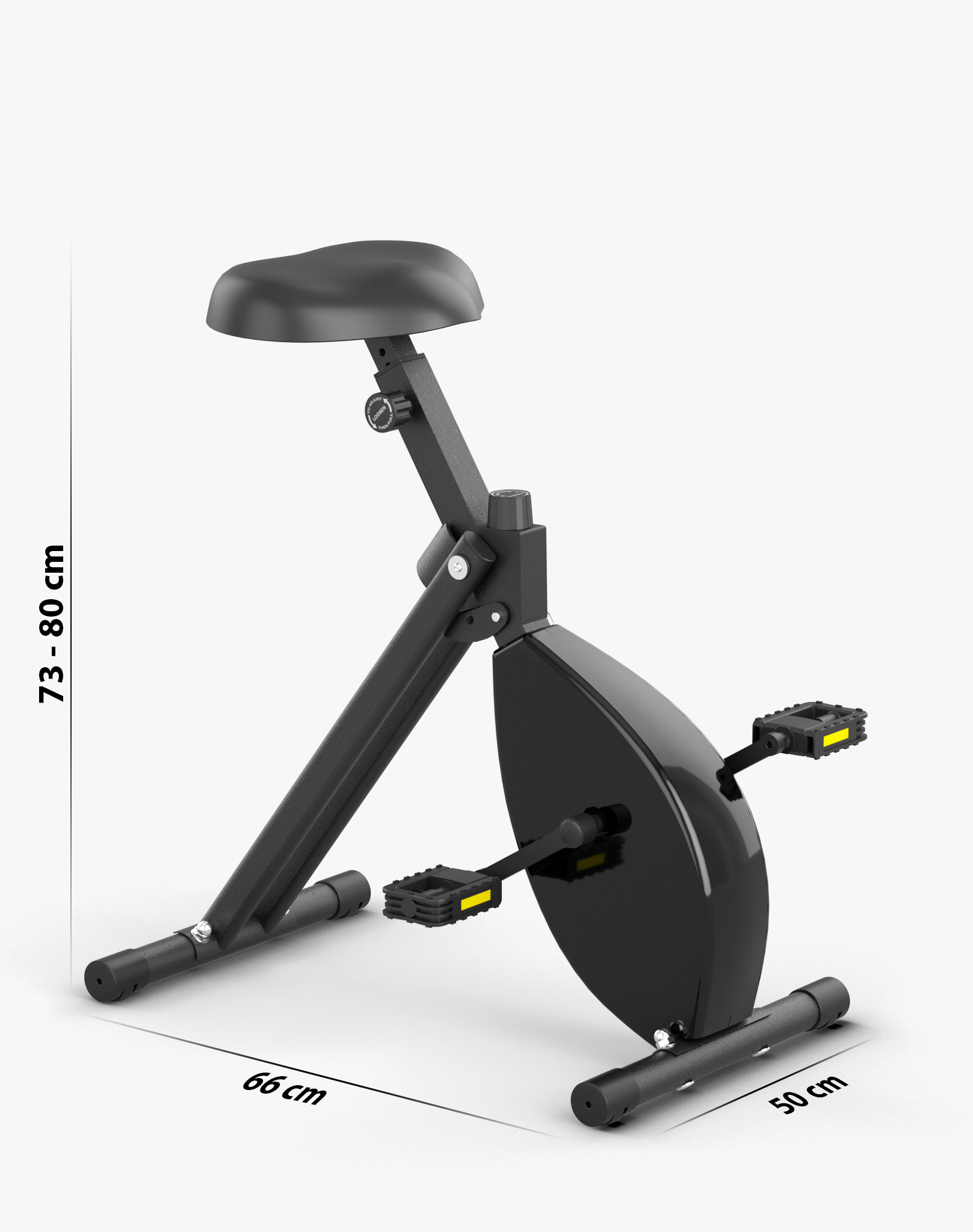
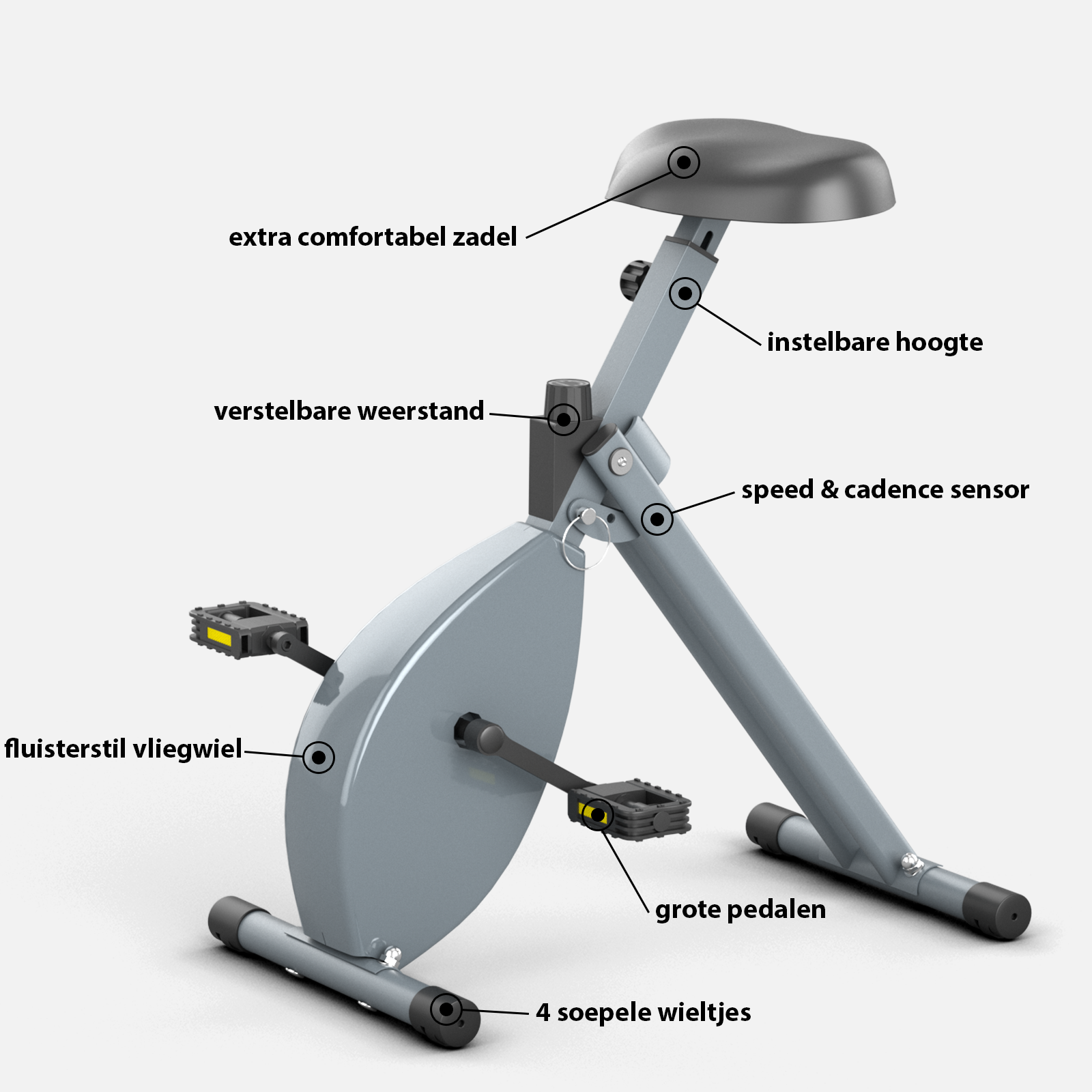


De Deskbike Original bureaufiets maakt het gemakkelijk om tijdens je werkdag zitten, staan en bewegen af te wisselen. De bureaufiets is geschikt voor gebruikers met een lichaamslengte van 140 tot 185 cm en gebruik je in combinatie met een zit-sta bureau. Dankzij het verstelbare zadel, de instelbare weerstand en de wielen is de Deskbike comfortabel en flexibel in gebruik.
€ 279,00 excluding VAT
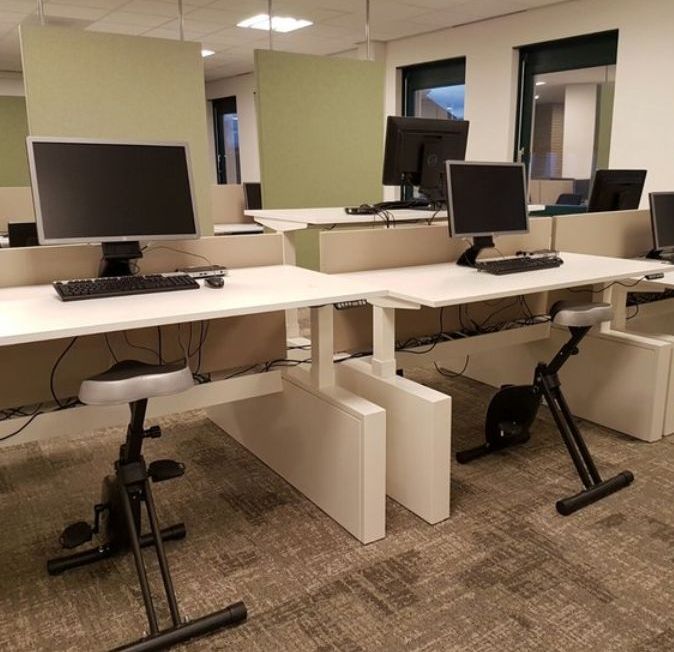
Met de Deskbike bureaufiets voeg je eenvoudig meer beweging toe aan je werkdag. Je gebruikt de bureaufiets in combinatie met een zit-sta bureau en kunt zo gedurende de dag afwisselen tussen zitten, staan en fietsen. Terwijl je bijvoorbeeld leest, belt, een online vergadering volgt of andere werkzaamheden uitvoert, blijf je op een laagdrempelige manier in beweging. De Deskbike Original is geschikt voor gebruikers met een lichaamslengte van 140 tot 185 cm. Het zadel is in hoogte verstelbaar en dankzij de instelbare weerstand bepaal je zelf hoe licht of intensief je fietst.
Is ontworpen om gemakkelijk onderdeel te worden van een actieve werkplek. Dankzij de wielen onder het frame rol je de bureaufiets eenvoudig naar je bureau en weer opzij wanneer je wilt staan of zitten.
De belangrijkste kenmerken op een rij:
Langdurig in dezelfde houding werken is niet ideaal. Met de Deskbike Original kun je gedurende je werkdag gemakkelijker van werkhouding wisselen. Je kunt een periode zittend werken, vervolgens staand werken en tussendoor rustig fietsen. Zo wordt bewegen een praktisch onderdeel van je werkdag zonder dat je daarvoor je werkplek hoeft te verlaten.
De Deskbike is vooral geschikt voor werkzaamheden waarbij je niet voortdurend heel nauwkeurig hoeft te typen of met de muis hoeft te werken. Denk bijvoorbeeld aan lezen, telefoneren, een online vergadering volgen of andere taken waarbij rustig bewegen goed te combineren is met je werkzaamheden.
Wil je inzicht krijgen in je fietsactiviteiten? Voor de Deskbike Original is optioneel een Bluetooth-sensor verkrijgbaar. Hiermee kun je verbinding maken met de Deskbike App en onder andere je fietstijd, afstand en andere prestaties bijhouden.
De sensor is niet standaard inbegrepen en kan als extra optie worden meebesteld.
Naast de Bluetooth-sensor zijn er verschillende accessoires verkrijgbaar om het gebruik van de Deskbike verder af te stemmen op jouw wensen. Zo kun je kiezen voor trappersokken wanneer je graag zonder schoenen fietst en voor een zadeldekje voor extra zitcomfort.
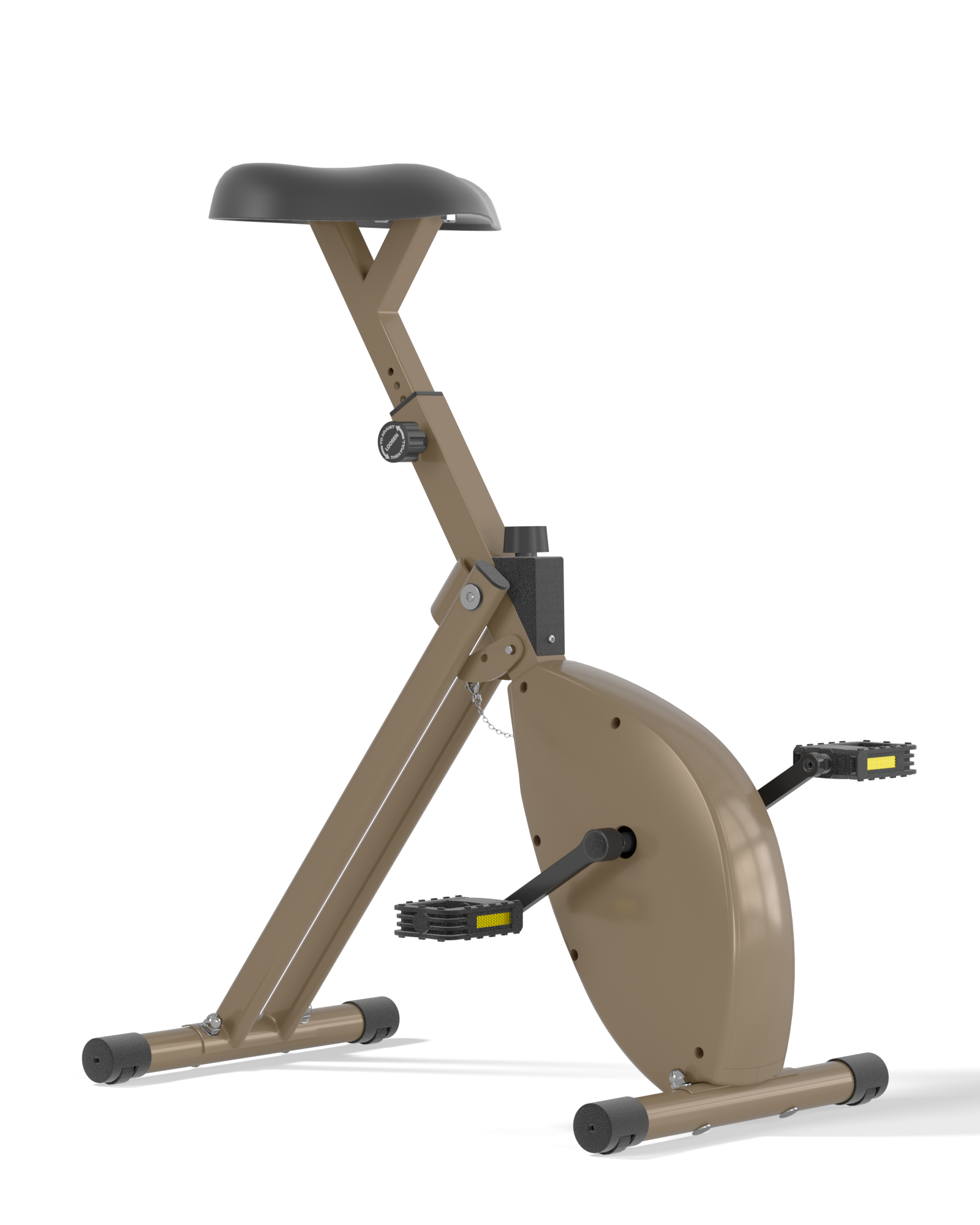
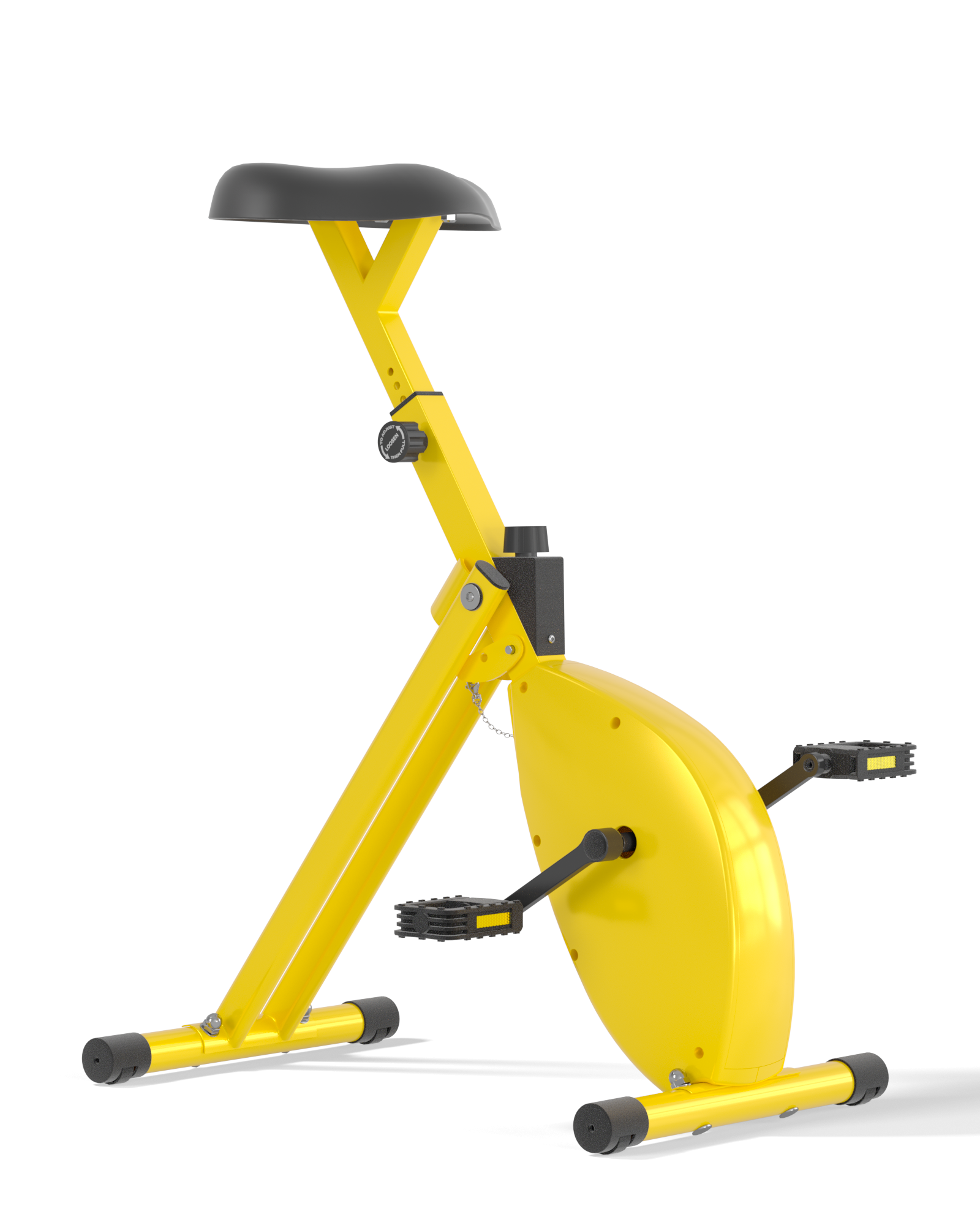
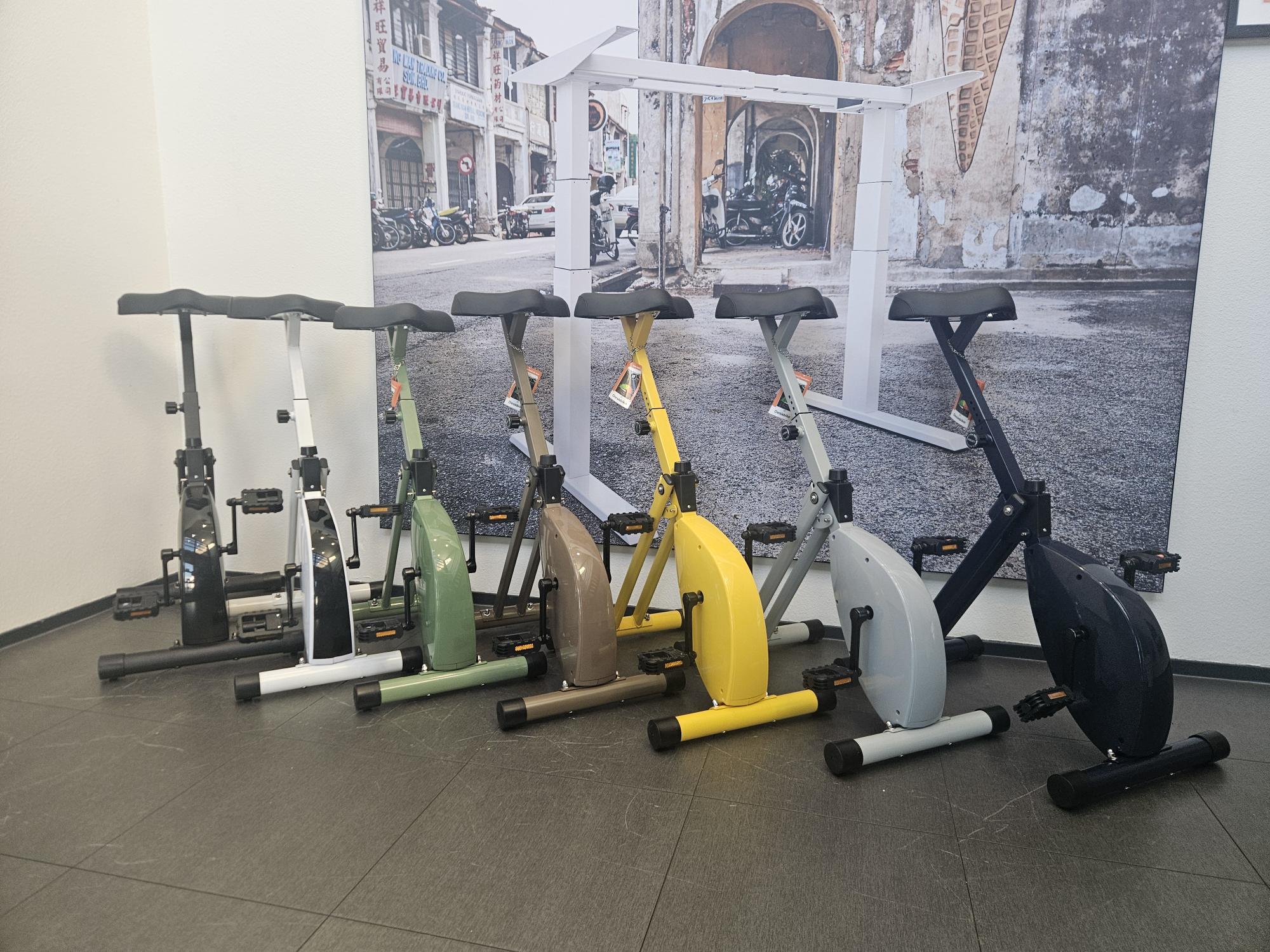
De Deskbike Original is bovendien verkrijgbaar in verschillende kleuren, zodat je de bureaufiets kunt laten aansluiten bij de inrichting van je werkplek.
Met de Deskbike bureaufiets maak je het gemakkelijker om zitten, staan en bewegen gedurende de werkdag af te wisselen. In combinatie met een zit-sta bureau creëer je een dynamische werkplek waarop je regelmatig van houding kunt veranderen.
Wil je weten of de Deskbike geschikt is voor jouw werkplek of welk zit-sta bureau je ermee kunt combineren? Neem dan contact op met onze ergonomische adviseurs. We helpen je graag bij het samenstellen van een actieve en comfortabele werkplek.
| Brand | ErgoLine |
|---|---|
| Complaint Resolution | Preventive, Back |
| Warranty | 1 year |
| Length | 165 - 185 cm |
Download the manuals here:
"Make a daily sport of big movements." That is the advice of scientists, such as Prof. Dr. Erik Peper, lecturer at the Dutch Paramedic Institute (NPI). At NPI, Prof. Peper teaches EMG, behavioral psychology to (occupational) physical therapists, also he is author of several books and publications in the field of computer-related complaints.
Good fitness promotes general health and prevents modern ailments such as RSI, a tablet neck or back pain. Thus, it is good to build physical activities into our daily schedule, and it is easiest when they are activities we do not do just for our health. For some, that's walking or running. For others, it's cycling, gardening or dancing. Enjoying exercise is what it's all about. Our health benefits most when we sustain those athletic efforts for at least thirty minutes a day.
In addition, it is also good to regularly do smaller exercises that take less time. This is a good reason to take a break from work to stay flexible, relax and recover. In ergonomics, we call these micro and macro breaks.
The exercises below are designed to improve your posture and stay mobile.
Thus, these exercises break stiffening habits. These exercises also have the added benefit of awareness, because in this way you notice how stiffened you have become from sitting still. The knife thus cuts both ways.
These small exercises can be performed in the workplace. Throughout the day, you can pay attention to different muscle groups over and over again, especially those parts of the body that do sometimes cause pain.
IMPORTANT: Remember to breathe through while practicing. Do not force anything, but practice controlled and slowly. Stop when you feel pain. Consult a doctor if you have a medical condition that may be aggravated by the exercises. Do the exercises in a playful and curious way. Ask yourself, "What exactly is happening?" and "Do I feel different after the exercise?
The exercises aim to break unhealthy habits and conditioning and replace them with relaxing alternatives. It takes quite a bit of guts to exercise on your own. Colleagues or roommates often find exercising ridiculous. Therefore, explain why you exercise and exercise. Wise employers encourage a group approach. After all, exercising and exercising together is more fun than swimming alone against the current.
Bring your arms above your head, slide your fingers together and bring your elbows to the side. Slowly bend to the left and then to the right. Feel the muscles stretch. Breathe along with the pace of the movement. Keep your shoulders relaxed. Bend to each side three times. Stretch your chest Bring your hands behind your neck and interlock your fingers. Push your elbows back as far as possible. Keep your head upright. Relax again.
Repeat the stretching motion five times.
Stand in the open doorway. Bring both hands behind you and place them against the frame at waist level. Hold onto the frame and step forward until your arms are straight. Bend forward and feel your chest stretch. Hold this position for 30 seconds. Keep breathing. Repeat the exercise three times. Relax your shoulder blades Place your hands behind your back. Let your hands slide behind your back toward the floor so that your arms are straight and your shoulder blades are pressed together. Count to three and then release. This exercise stretches and relaxes the muscles of your chest and back.
Repeat this movement five times.
Put your hands on your thighs while sitting upright, on the front of chair. Turn your head to the left, see how far you can see and remember that place. Now turn your head to the right and see how far you can see. Remember that place. Rub your right hand toward your right knee while simultaneously turning your head to the left. Bring your right hand back and your head will return to the center position. Now slide your left hand toward your left knee while your head turns to the right. Bring your left hand back again and your head returns to the center position. Repeat this movement ten times and then rest. Repeat this movement again, but as your right hand slides to your knee your head turns to the right. When your left hand slides to your left knee your head turns to the left.
Repeat this movement ten times as well.
Rest again. Again make exactly the same movement, but when your head turns to the right you look with your eyes to the left. When your head turns to the left you look to the right with your eyes.
Repeat the movement again ten times.
Rest again. Now see how much further your head can now turn to the left and see how much further you can see to the right.
Stand on all fours and exhale as you round your back and inhale as you hollow your back. Alternate rounding and hollowing with each breath.
Repeat this movement ten times.
Exercises for neck, shoulder pain/tension
Many screen users complain of pain in the neck and shoulders because the attention is concentrated on the screen and not on the body. The unconscious and slow raising of the shoulders is not noticed. Until it starts to hurt. Also, the neck is often stretched forward to see better. This too strains the muscles unnecessarily. Simple exercises make the tension conscious and only then can the tension be consciously released.
Let the arms dangle along the body. Draw the shoulders up toward the ears and hold the tension for a moment. Release the shoulders. Pull the shoulders up a little further and release again. Rotate the shoulders around and feel the relaxation. Keep breathing calmly.
Pull your neck back as if someone were pulling a string attached to the back of your neck. Just keep your head straight or look down slightly. Keep your shoulders, jaws and tongue relaxed. Continue to breathe easily and relaxed. Stay in this turkey pose for about 5 seconds.
Do this exercise ten times a day.
Imagine a very long pencil strapped to the head of your right shoulder. The pencil reaches up to the wall. Write your first name on the wall and do so by moving your shoulder. Now write your last name on the wall with your left shoulder.
Repeat this exercise a few times with different texts.
Bring both your arms above your head with your fingers pointing to the ceiling. Breathe with the stretching. Reach toward the ceiling with your left hand, release slightly, then reach toward the ceiling again with the right hand. Go back and forth like this for one minute. As you stretch your right arm upward turn your head to slightly to the left. As your left arm stretches upward you turn your head to the right. Experiment with the direction of the head and arms.
Lie on the floor with your legs resting on a chair. Your hip and knee joints make a ninety-degree angle. Let the muscles of the neck, shoulders and back remain relaxed.
The legs are stored under the work table while working at the PC. They are "used" again only when it is necessary to leave the workstation. It is important to allow the legs a fair amount of room to move. This is necessary to avoid blocking blood circulation. Cold feet is a sign of insufficient circulation. Allow the legs ample room to move.
Rotate the ankles around, changing directions frequently.
Ignore the elevator.
Stand with your back against a wall. Now slowly and steadily sink through your knees until your knees and hips make a 90-degree angle. Remain in that bent position and continue to breathe calmly. This exercise strengthens the muscles at the front of the thighs.
According to the Health Council's exercise guidelines , a more active lifestyle is vital. Hereby it is prescribed that adults get at least 30 minutes per day in movement by walking or cycling and in addition at least 2 times per week muscle and bone strengthening activities (combined with balance exercises). Important addition and note to this guideline is that prolonged and excessive sitting still should absolutely be avoided!
In short, with a sedentary job, it is important to look for a way to break the sitting posture and to stand up and move around regularly. A sit-stand desk can be a godsend in this regard, as the work does not have to be interrupted and work can continue while standing or cycling.
The exercise guideline is a minimum guideline to motivate people with low activity levels to get more active, but also an awareness for people with sedentary jobs to become more active.